Commercial Roof Fire Damage Repair in Concord, CA
A medical facility director arranging a roof assessment after fire exposure needs the building release and supporting condition settled before removal becomes a repair commitment. We assess and repair fire-damaged commercial roofing in Concord, CA, from the material findings available at the assigned property. The roof task should identify accessible damage, further examination and the preparation needed for a permanent connection. A surface's appearance may guide the assessment, but it does not establish every concealed layer's suitability for retention.
For a healthcare roofing assignment in Concord, identify the subject structure and its authorized access requirements before planning the work. The operator and responsible project personnel establish the actual access restrictions. Those releases stay ahead of a roof opening. The facility record should distinguish an available visit from a supporting or specialist decision still needed before reconstruction is authorized.
Keep the building release ahead of roof access
A damaged area may need supporting or safety assessment before close examination is permitted. We identify the roofing information required and work within the release established for the assignment. An inaccessible area remains a stated examination limit. The facility director should see what the visit can establish and which further assessment affects the proposed roofing task, rather than treating general site access permission as completion of every supporting decision.
An aerial assessment of accessible roof damage can help record locations where suitable access and operating conditions permit it. We retain the method's limitations and identify details still requiring closer examination. Images can show displaced or visibly altered material without establishing concealed support. The next work request should preserve that distinction, giving responsible project personnel a useful observation record and an explicit remaining assessment.
Examine the retained material before selecting repair
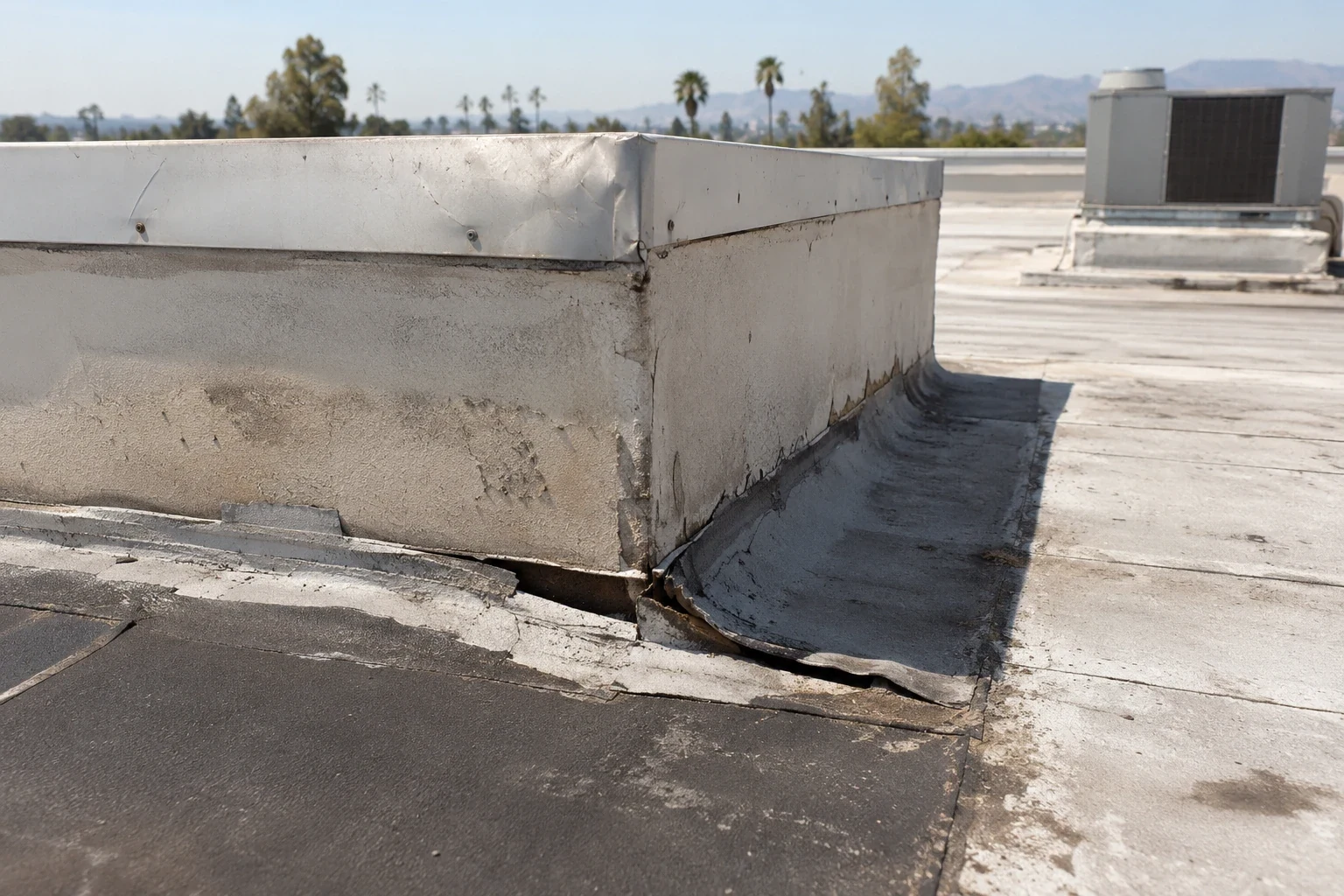
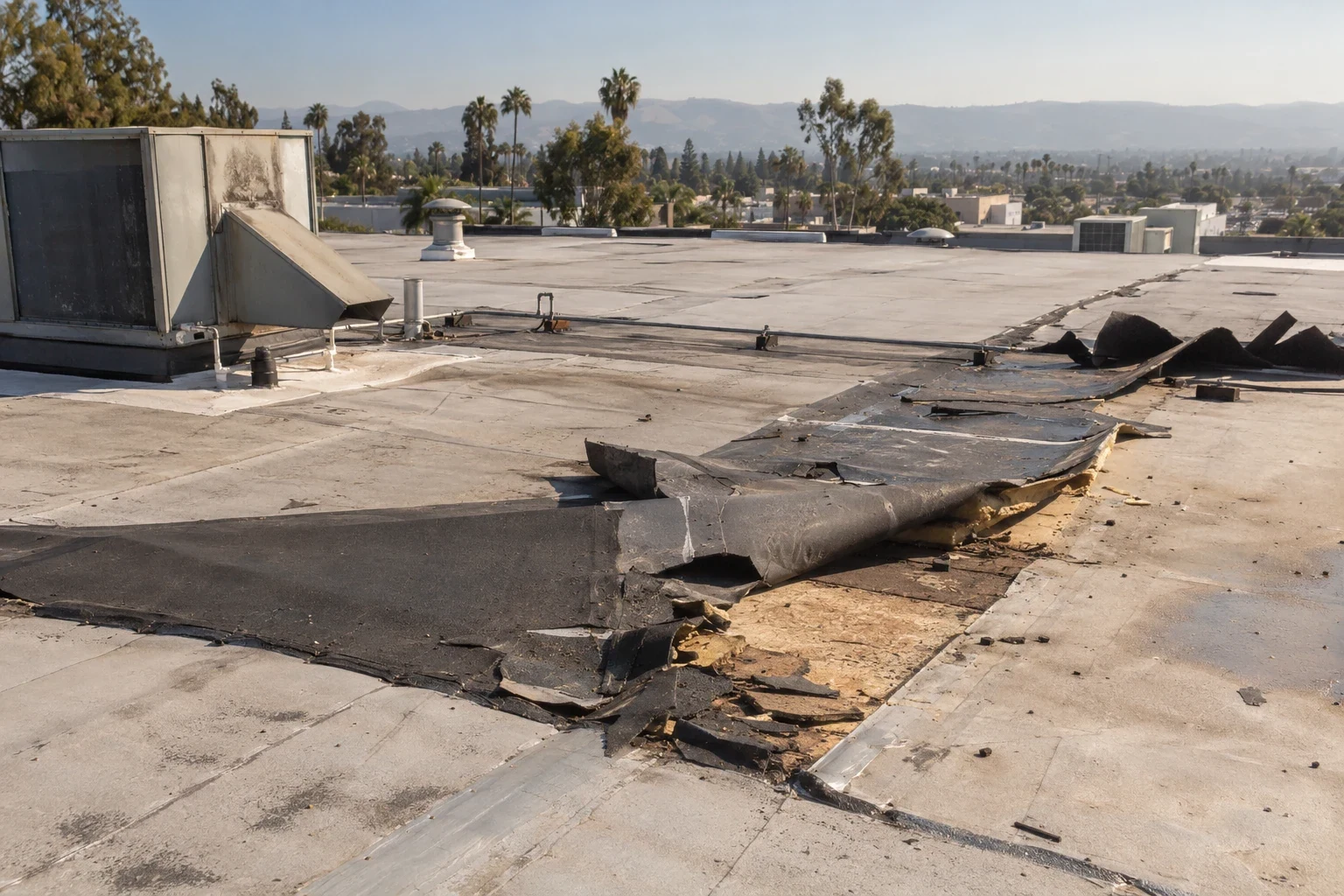
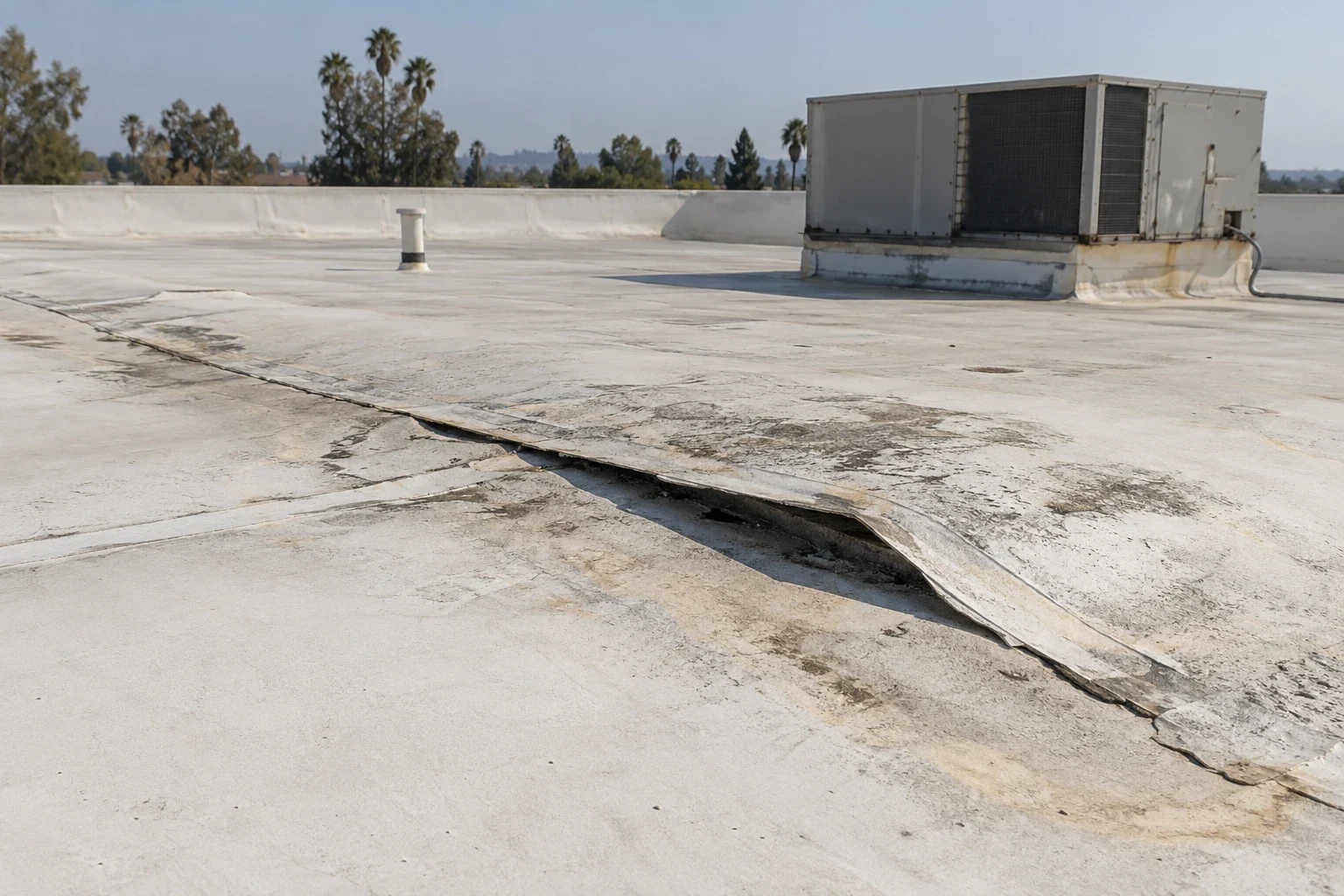
Heat exposure can alter covering, insulation or adjoining components in different ways. We examine accessible material condition and identify where removal or further assessment is needed to establish a usable receiving area. The record should separate observed change from an unconfirmed concealed condition. Changes in texture, separation or distortion can help locate material requiring closer examination. We record those observations with their location and preserve any supporting assessment still needed before retention is decided. That lets the facility team authorize a defined examination rather than infer a complete removal quantity from a discolored surface alone.
Preparation of supporting insulation and cover board follows the condition established for the proposed assembly. We describe confirmed replacement and the transition to retained construction, with unresolved support left visible. The quantity needs an examination basis and a suitable closure. A new upper membrane should not hide a layer whose retention decision remains unsettled beneath the permanent connection.
Assign receiving support to the proper decision
An altered deck, wall or equipment support can affect reconstruction beyond the roof covering. We identify the accessible roofing interface and the supporting question requiring the appropriate discipline. The material recommendation remains separate from that assessment. Keep the decision and any outside-trade correction ahead of final roofing so the proposed detail receives suitable construction rather than an assumed support condition.
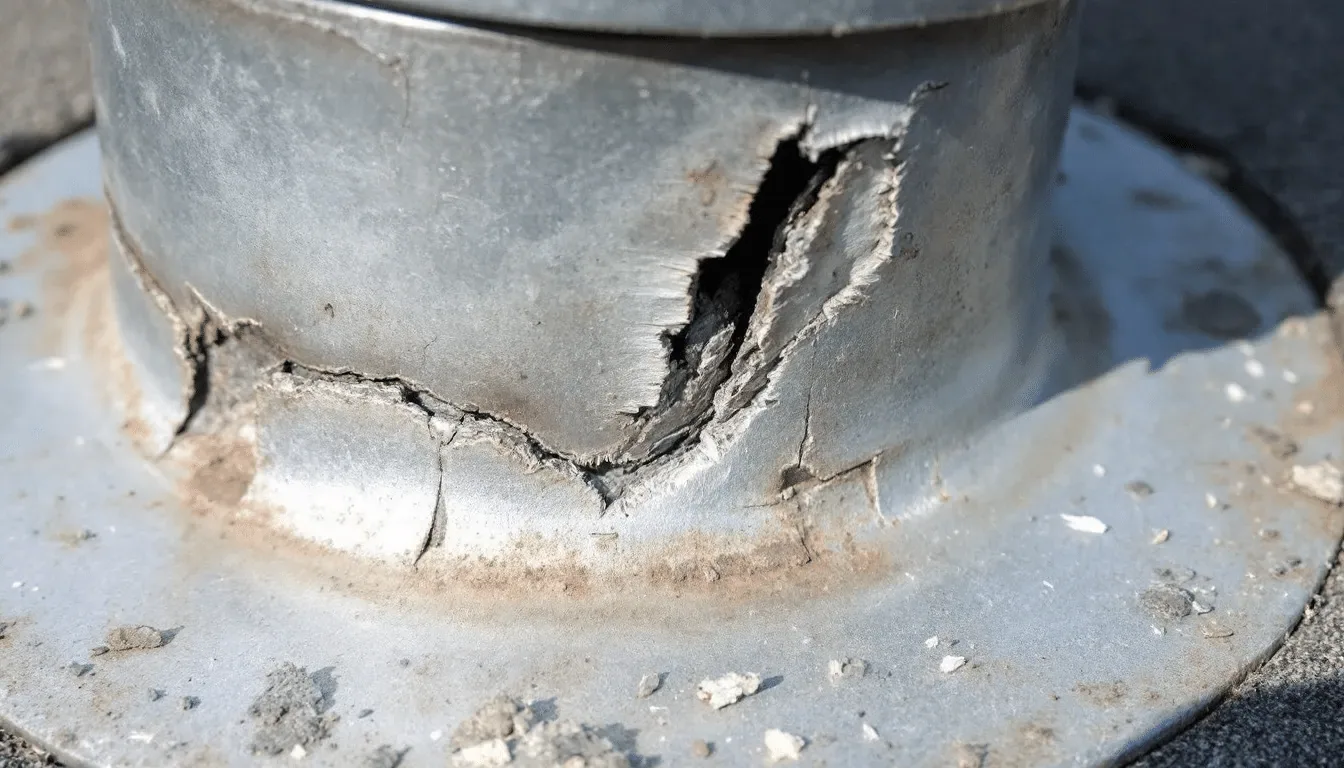
A correction at a damaged flashing transition needs the receiving surface and upper termination assessed together. We describe clearance and preparation where they affect the proposed connection. Equipment or wall work may need completion first. The facility director can coordinate that release from the defined interface, keeping permanent field placement separate from a detail still blocked by supporting work.
Distinguish entry damage from exposure findings
Water introduced through a damaged opening may affect material outside the visible fire-related change. We examine accessible entry indicators and identify further investigation where retention depends on concealed moisture. The opening needs an authorized extent, affected-space coordination and compatible closure. The work request should retain that investigation separately from material already confirmed for replacement, so the permanent boundary follows actual findings.
Thermal screening for further moisture examination can support location selection under suitable conditions. We retain confirmation requirements and limits appropriate to the method. A thermal indication does not by itself establish every hidden layer's condition or settle fire-related support questions. The record should preserve the different purposes of those assessments so the facility team can authorize the next useful task.
Connect replacement to the examined boundary
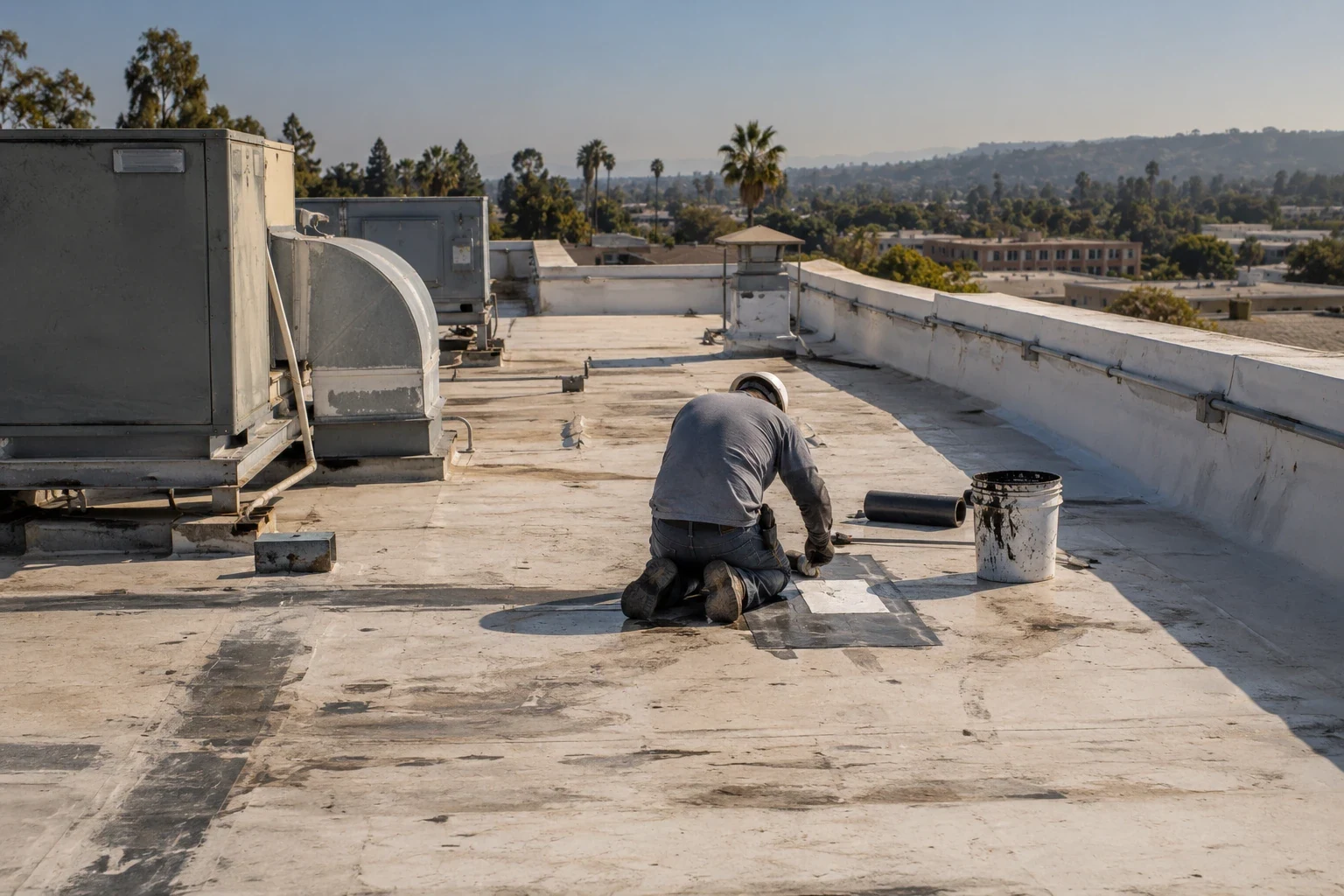
A repair option needs sufficient usable adjoining material for the selected preparation and joining procedure. We identify the assembly and the receiving condition relevant to the correction. If accessible damage extends beyond a limited detail, the wider option needs its own removal and supporting scope defined. Keep the reason for that boundary with the findings rather than let a broad replacement allowance conceal the actual preparation decision.
A separate opening through retained covering may need a different preparation boundary from material altered by heat. We describe the two tasks and how their permanent connections meet. Related defects can be coordinated while their quantities and assessment purposes stay distinct. The facility team can then see which scope is confirmed and which supporting question still needs authorization before material orders commit the correction.
Record the release and the completed construction
Mount Diablo Industrial Park is a multi-building industrial area in Concord.
Work near the Mount Diablo industrial area needs its own examination and building instructions. Emergency calls are accepted over holidays, during weekends and through the night where an earlier feasible holding task is needed. We record that protection separately from permanent reconstruction. At handover, the facility record identifies completed locations, relevant materials and any deferred supporting or interior concern, leaving the responsible personnel a clear next decision rather than an implied completion beyond the roofing task.
Separate fire exposure from the repair boundary. Following a fire, coordinate roof access with the authority responsible for the building and any scene-safety restrictions. Record visible heat effects, fire-service openings, damaged penetrations and water exposure as separate observations; the roof assembly or support may require review beyond the apparent surface. Do not infer cause, structural capacity or insurance coverage from discoloration alone. Before closing an opening, identify who approves the replacement layers, insulation and connection at each edge. A Concord-area facility's operating contact should also confirm the spaces below that need protection. The work request can distinguish immediate weather closure from permanent reconstruction, with specialist questions and concealed conditions retained for review rather than folded into an assumed roof quantity. The same review can guide a Concord facility or a building in Martinez, while keeping each location’s authority and observed damage distinct.
Commercial Roofing Questions
What needs to be established before the roof visit?
Retain the actual building and affected-area release. We identify roofing information needed and the limits of accessible assessment. Supporting or specialist decisions remain separate where they control closer examination.
Can a discolored covering settle concealed removal?
Examine the material and supporting condition relevant to retention. We identify confirmed change and further assessment needed. The permanent quantity follows that evidence rather than surface appearance alone.
How should an aerial image enter the findings?
Use it to record observed locations with the method limits stated. We identify details still needing close examination. Images do not establish every concealed connection or supporting layer.
What makes a replacement boundary useful for approval?
Connect it to the examined assembly, usable receiving material and supporting decisions. We distinguish confirmed preparation from unresolved quantities. The facility team can then authorize a defined permanent task.
What should remain visible after temporary protection?
Record its holding purpose and location with permanent work still pending. We identify the further release or assessment needed. The next work request stays tied to that decision before reconstruction proceeds.