Commercial Roof Membrane Puncture Repair in Concord, CA
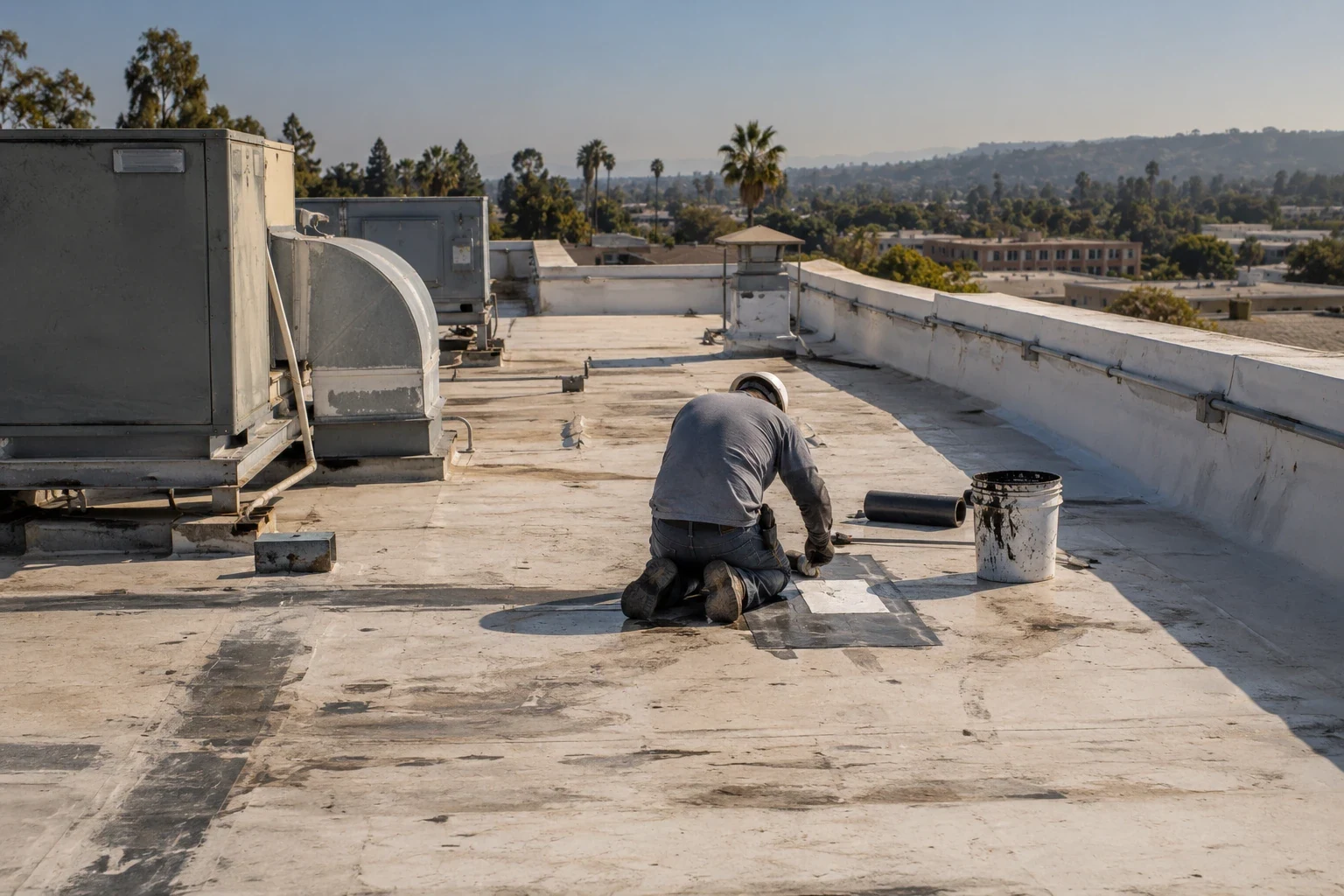
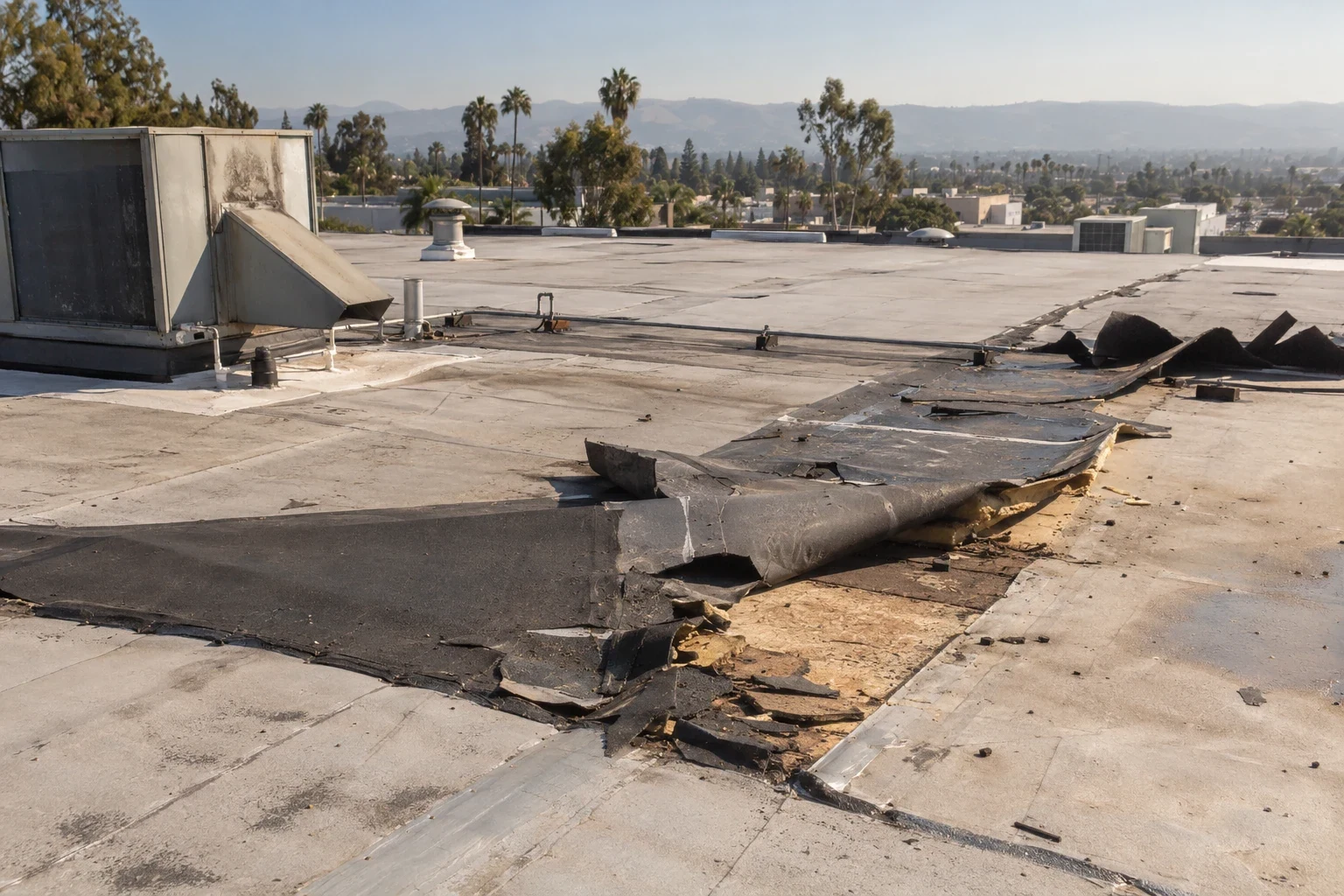
A warehouse facility director finding an opening beside a material route needs the area protected and the repair boundary examined before another work request simply calls for a patch. We repair punctured commercial roof membranes in Concord, CA, by assessing accessible covering, supporting layers and the receiving material around the damage. The visible opening identifies a place to start. Its size alone does not establish the quantity needed for a compatible permanent connection or decide whether moisture has affected material beneath it.
Concord Business Park is an industrial property near the junction of Interstate 680 and State Route 4. For a proposed roof task at an assigned building there, we arrange the actual roof route and affected-space release with the designated facility contact. Bring the location and timing of the observation into the call. Emergency calls can be coordinated overnight, on weekends and during holidays where an earlier feasible exterior protection task is needed.
Locate the opening and preserve useful observations
A photograph should show the opening and enough surrounding detail to locate it again. We examine accessible tears, displaced material and the adjoining connection, retaining any access limits in the findings. An observation made after equipment service can help direct the visit without establishing who caused the damage. The work request needs the actual condition and proposed correction, with any separate responsibility question left to the appropriate review rather than carried into a roofing quantity as a confirmed fact.
An inspection of the punctured roof area can identify useful further examination and the preparation needed around the visible defect. We record whether the assigned area can be reached safely within the operator's release. An inaccessible side of a detail stays an examination limit. The facility director can arrange the next useful access task while temporary protection and permanent preparation remain separately described.
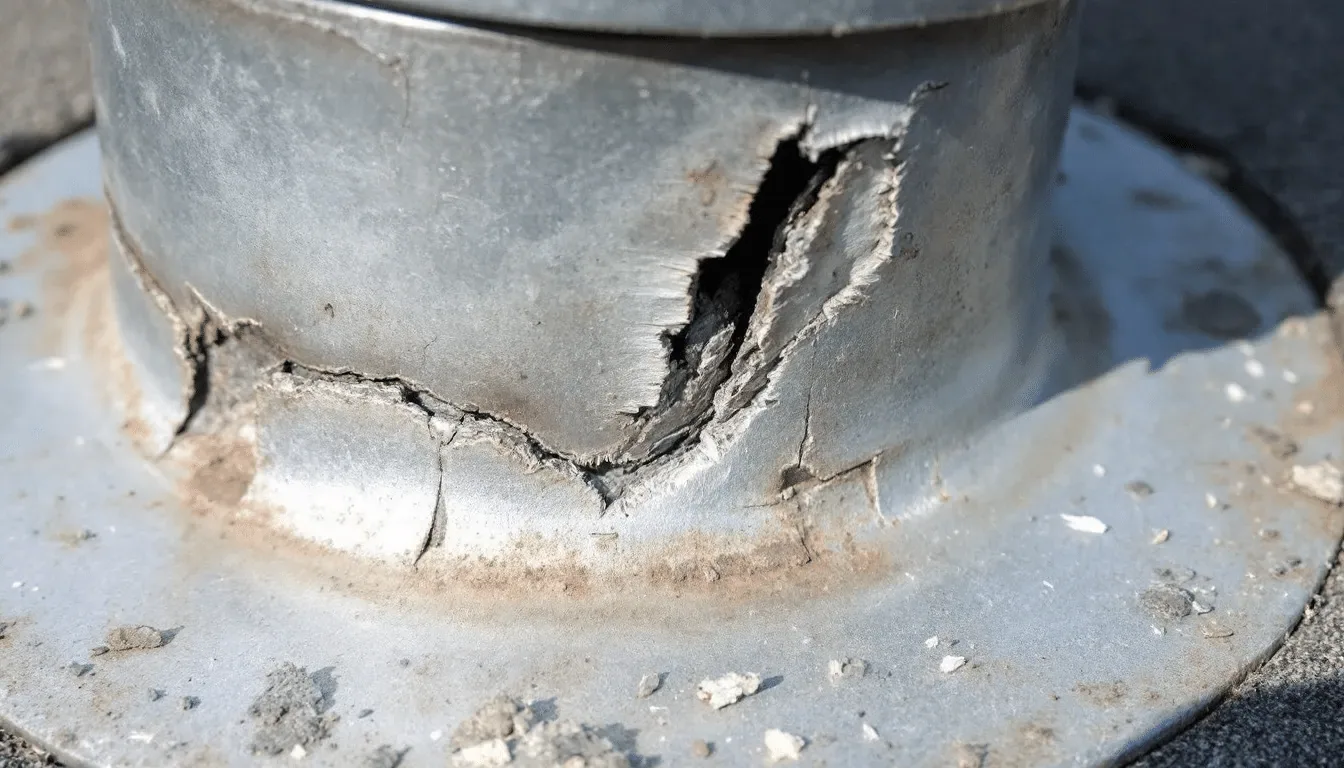
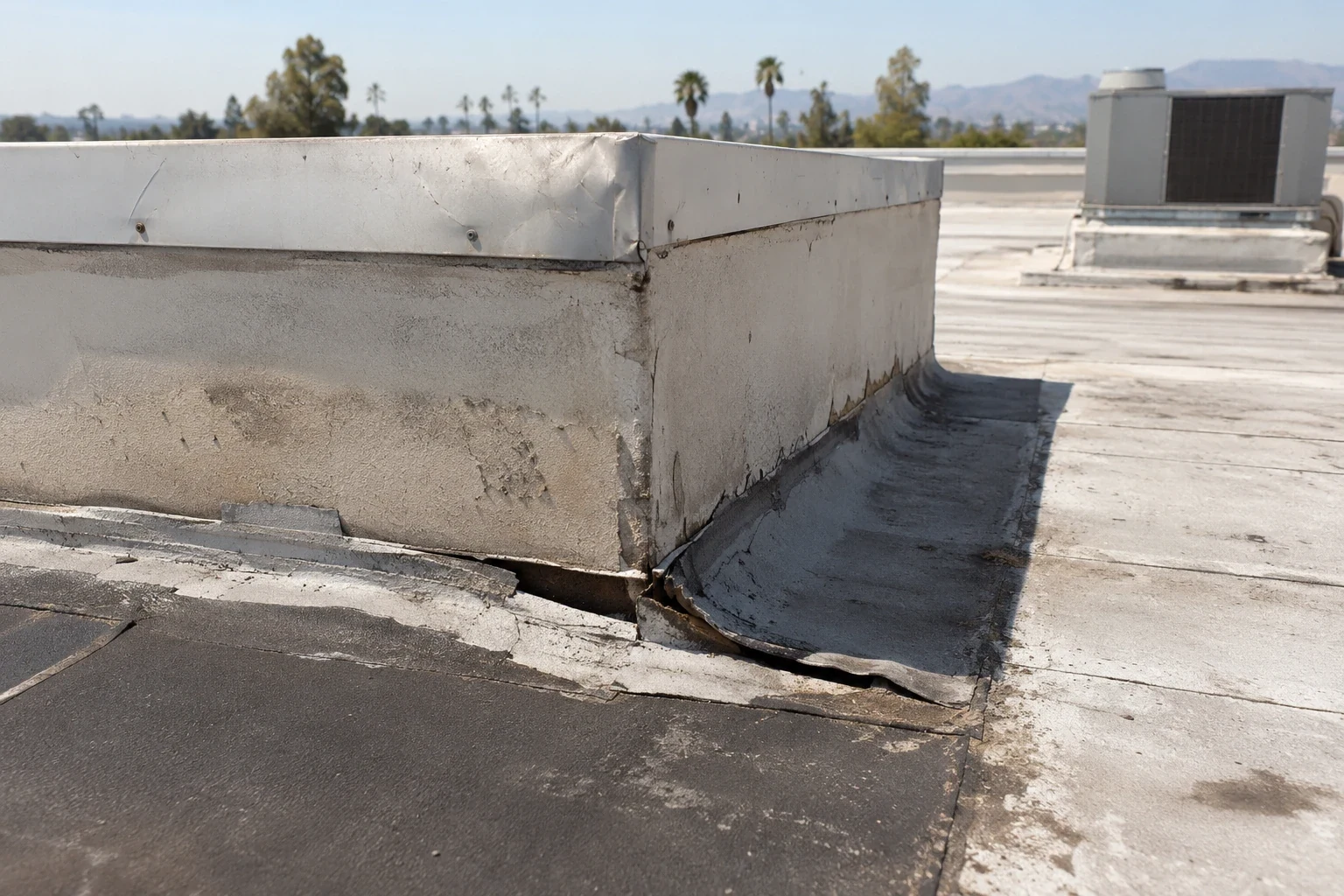
A damaged flashing adjoining the field opening needs its accessible upper and lower connections examined before the two corrections share a permanent boundary.
Reach a usable connection around the damage
Adjoining covering needs to suit the repair material and joining procedure selected for that assembly. We identify the existing roof and assess accessible surface condition, earlier repairs and detail clearance. Contamination or deteriorated material can change the preparation boundary. The permanent scope should show how the new material connects to suitable retained construction, rather than assuming a standard patch dimension establishes enough usable surface at every opening.
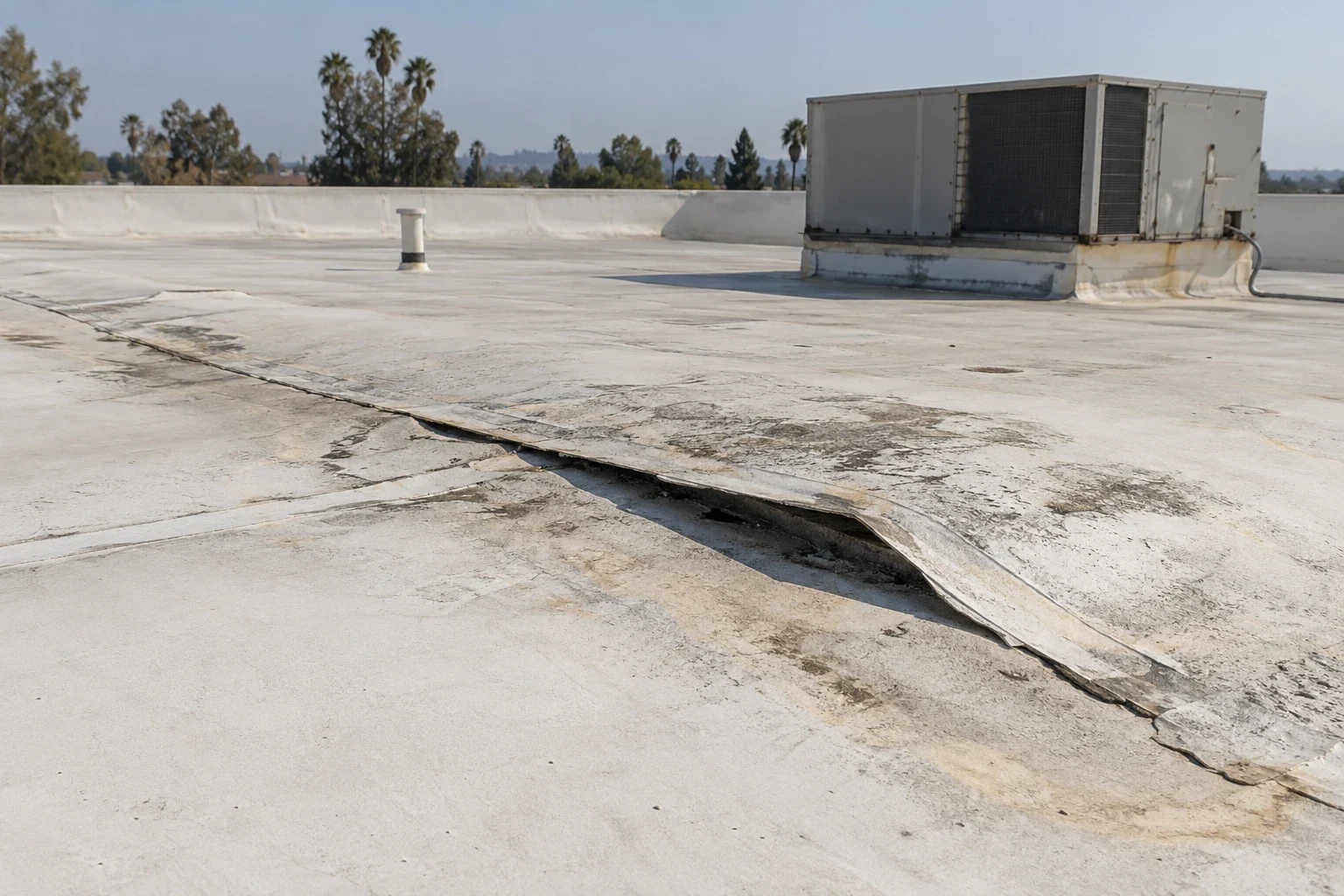
An opened joint beside the puncture requires its own receiving condition to be examined. We describe related corrections together where that helps sequencing while preserving their individual purposes. A tear through field material and a separation along a joint can meet at one detail without having identical preparation requirements. Retain that distinction in the work request so the facility team can understand why the proposed connection extends beyond the original visible defect.
Investigate support where retention changes the scope
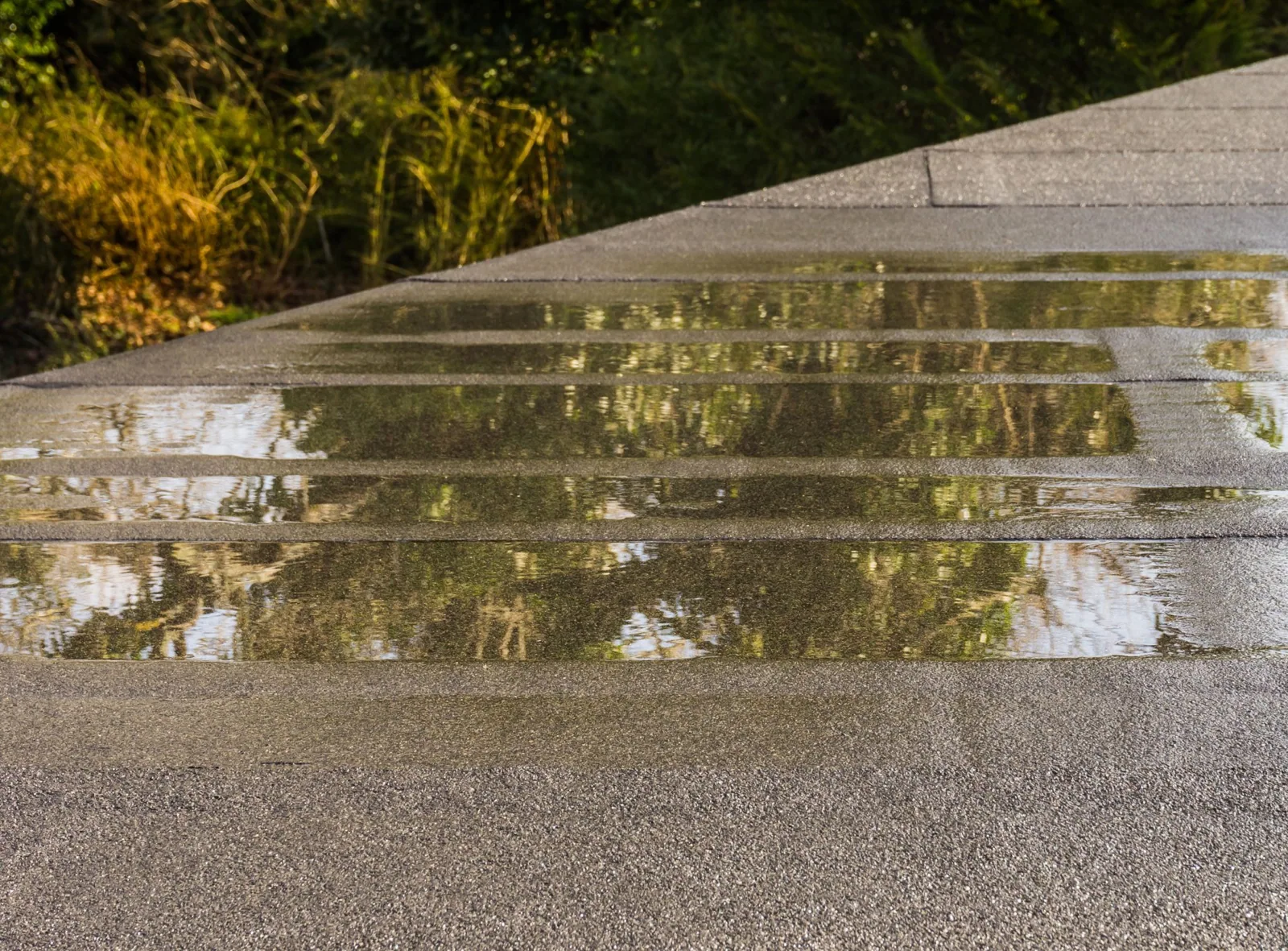
Water through a small opening can affect insulation or support outside the surface defect. We identify accessible indicators and further examination where concealed condition controls what can remain. A controlled opening should have an authorized extent, protection for the space beneath and suitable exterior closure. Findings confirmed during that examination stay separate from an unresolved area whose removal quantity still needs evidence. The facility director can approve the next task without accepting an assumed concealed boundary.
Replacing affected insulation or cover board needs the actual assembly and adjoining height considered. We describe material confirmed for replacement and the transition to retained construction. Support questions requiring a design discipline remain assigned to that review. A new upper patch should complete a supported roofing correction, with the receiving layers established before a permanent seam covers the examination location.
Select the repair procedure for the assigned membrane
The membrane family helps organize a repair option, but the actual installed material and accepted joining procedure govern the connection. We identify relevant construction and assess the condition available for preparation. Previous patches may require removal or different detailing to reach suitable material. The scope should preserve that finding before procurement, so a supplied sheet and an accessible work window do not stand in for an accepted permanent detail.
A repair connection in a TPO assembly needs compatible materials and preparation suited to the installed construction. We describe the proposed connection and checks relevant to the assignment. A similar-looking surface is insufficient identification. Facilities can coordinate a specific task with the applicable roof records available, keeping any unresolved material identification or joining condition ahead of the final installation allowance.
What will the new joint actually receive? Establish that before choosing the permanent boundary.
Protect the corrected detail from later traffic
The operator's actual equipment and maintenance routes belong in the discussion when another task will cross the repaired area. We identify the completed connection and describe protection relevant to the roofing assignment. A later service visit needs its own agreed route and operating release. That coordination helps the facility director connect the roofing task to the PM schedule without promising that a repaired membrane establishes suitable access for every future activity.
A later maintenance review of repaired locations should retain the original findings and completed materials. We identify new observations separately from the earlier correction. An additional penetration or a changed support requires its own connection assessment. The maintenance log can then guide the next visit while the roof recommendation remains tied to current condition at the assigned detail, rather than assuming all later damage belongs within the first repair.
Leave the facility record with the permanent boundary
Mount Diablo Industrial Park is a multi-building industrial area in Concord. For proposed membrane repair at an identified property there, the facility contact establishes the subject building and practical access instructions. We define the affected location, compatible preparation and any unresolved supporting assessment. Keeping that information with the scope lets the operator arrange contents protection and the material route before an examination expands the work area.
A visit near Mount Diablo Industrial Park roofing locations needs the roof records for that assigned building. At completion, we retain corrected locations, relevant material and the intended connection, with deferred findings separately identified. Temporary protection remains recorded as a holding task where permanent work is pending. The next work request can then address the actual remaining decision while the completed puncture repair has a clear, usable place in the facility record.
Commercial Roofing Questions
Does the visible hole define the patch dimensions?
Examine the adjoining material and suitable joining boundary first. We identify preparation and supporting findings that affect the permanent extent. The visible defect is the starting location, not the complete quantity basis.
What helps locate a puncture during the visit?
Share the location, observation timing and a photograph showing surrounding details. We record accessible condition and access limits. Any responsibility question remains separate from the roofing assessment.
When should material beneath the opening be examined?
Investigate where concealed condition affects retention or the permanent connection. Arrange the opening, contents protection and compatible closure together. We separate confirmed affected layers from unresolved quantities.
Can any matching membrane be used for the correction?
Identify the installed construction and compatible repair procedure. We assess receiving condition and applicable preparation. Similar appearance alone does not establish a suitable joining material or detail.
What should facilities retain after repair?
Locate the corrected detail and record relevant material and deferred findings. Coordinate later routes with the operator. A new opening or changed support receives its own assessment before another permanent connection is made.